
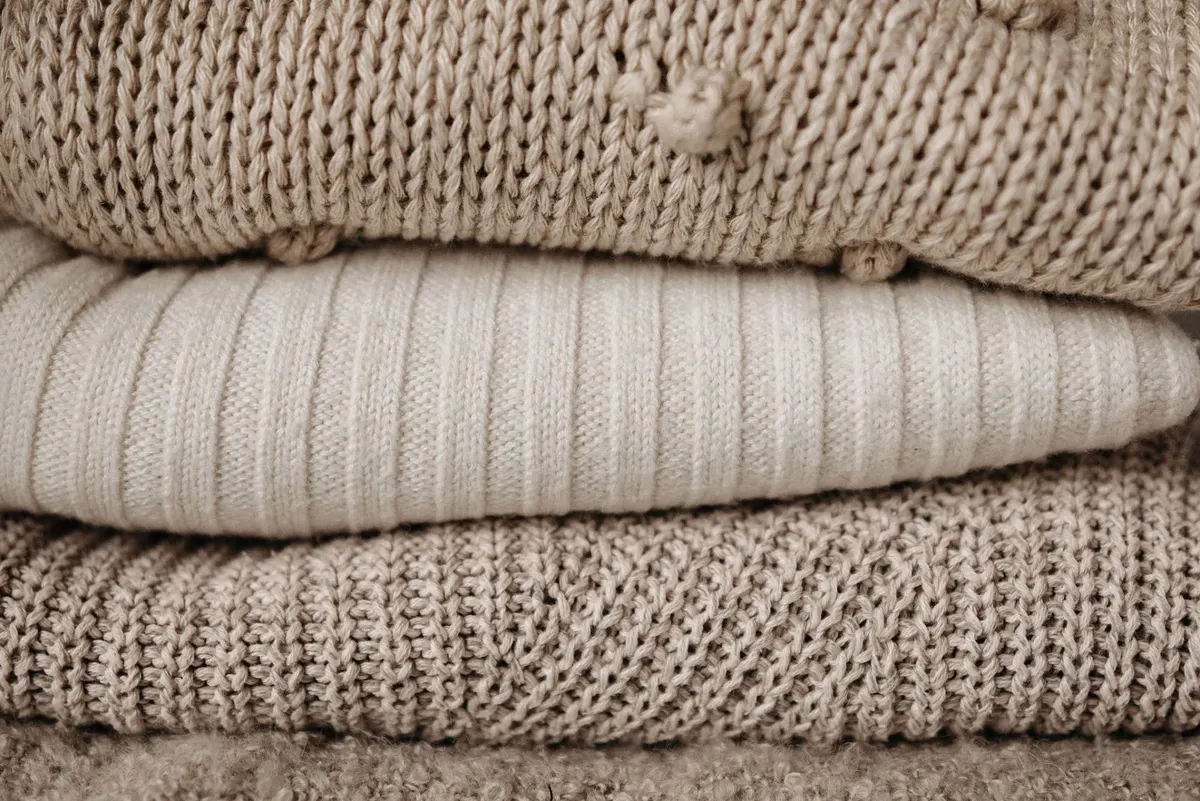
You spot a beautiful wool sweater. It costs ten times more than the one on the high street. Is it really worth it? Cost per wear is a simple way to find out, and it takes about two minutes. It turns the price tag into something more useful: what a piece actually costs you each time you put it on.
Here’s the idea, a worked example with real numbers, and a break-even table that shows how many times you’d need to wear a pricier piece before it pays off. It won’t always say “buy the expensive one”, and we’ll be honest about when it doesn’t.
The short answer: Cost per wear is the price divided by the number of times you wear something. A $370 sweater worn 120 times costs about $3.08 a wear, and about $1.93 if you keep wearing it for eight winters. The longer a piece lasts and the more you wear it, the lower the number gets.
Last updated: November 2026. The examples use made-up wear counts to show how the maths works. Your numbers will differ.
Jump to: The formula · A worked example · Calculator · Break-even table · Estimate your wears · Add repairs and resale · When it misleads · Lower your number · Examples from our directory
The cost per wear formula
The formula is as simple as it sounds:
Cost per wear = price ÷ number of wears
A $120 jacket you wear 60 times costs $2 a wear. If you only wear it 10 times, it costs $12 a wear. The jacket is the same. What changed is how much use you got out of it.
That is why the tag alone can mislead. A $30 top you wear twice is more expensive per wear than a $200 coat you wear 150 times.
A worked example: cheap sweater vs well-made sweater
Let’s compare two sweaters. These wear counts are examples, not measurements.
- The cheap one: $35. It looks fine at first, but after about 12 wears it has pilled and lost its shape, and you stop wearing it. Cost per wear: $35 ÷ 12 = $2.92.
- The well-made one: $370. This is the price of a Dale of Norway sweater in our October 2026 check (see our guide to Norwegian sweater brands). You wear it about 24 times a winter. After 5 winters that is 120 wears. Cost per wear: $370 ÷ 120 = $3.08.
After five winters the two cost about the same per wear. But the well-made sweater is still going. Wear it for 8 winters and you reach 192 wears: $370 ÷ 192 = $1.93. And you didn’t have to shop for a replacement.
That is the honest picture. A well-made piece doesn’t win straight away. It wins if you keep it long enough, and it keeps looking good for that long.
Cost per wear calculator
Try your own numbers. Piece A is the cheap sweater from the example above and Piece B is the well-made one, so change them to compare anything you are thinking of buying. Prices are in US dollars. Everything runs in your browser, and nothing is saved or sent anywhere.
The comparison tells you how many wears the pricier piece needs to catch up. The table below shows the same idea for a few common prices.
How many wears do you need to break even?
Here is the question most people really have: how many times do I need to wear the pricier piece to match what the cheaper one costs me per wear?
The formula is: wears needed = price of the pricier piece ÷ the cheaper option’s cost per wear.
| If the cheaper option costs you this per wear | A $150 piece needs | A $370 piece needs | A $450 piece needs |
|---|---|---|---|
| $2 | 75 wears | 185 wears | 225 wears |
| $3 | 50 wears | 124 wears | 150 wears |
| $5 | 30 wears | 74 wears | 90 wears |
Read it like this: if you pay about $3 a wear for cheaper sweaters, a $370 sweater needs about 124 wears to match. That sounds like a lot until you see how many wears a good piece can get.
How many times will you really wear it?
Most people guess this part badly. Try estimating your wears with a quick sum: times a week × weeks worn a year × years.
These habits are examples. Use your own.
| Piece | Times a week | Weeks worn a year | Wears a year | Over 5 years |
|---|---|---|---|---|
| Winter coat | 3 | 20 | 60 | 300 |
| Wool sweater | 2 | 12 | 24 | 120 |
| Jeans | 3 | 40 | 120 | 600 |
| Leather boots | 2 | 25 | 50 | 250 |
A winter coat worn three times a week for 20 weeks gets 60 wears a year, so 300 over five years. Everyday pieces add up fast too: at three wears a week for 40 weeks, a pair of jeans gets 120 wears a year.
There is also a useful warning in the numbers. Between 2000 and 2015, clothing production roughly doubled, while the average number of times a garment was worn fell by 36%, according to the Ellen MacArthur Foundation’s 2017 report A New Textiles Economy. Clothes are being bought more and worn less. Cost per wear is one way to push back.
Add repairs and resale for the full picture
If you want to be more precise, use this version:
Cost per wear = (price + repairs and cleaning − what you could resell it for) ÷ wears
Take the $370 sweater again. Say you spend $40 on a repair over the years, and you could resell it for $80. That is ($370 + $40 − $80) ÷ 120 = $2.75.
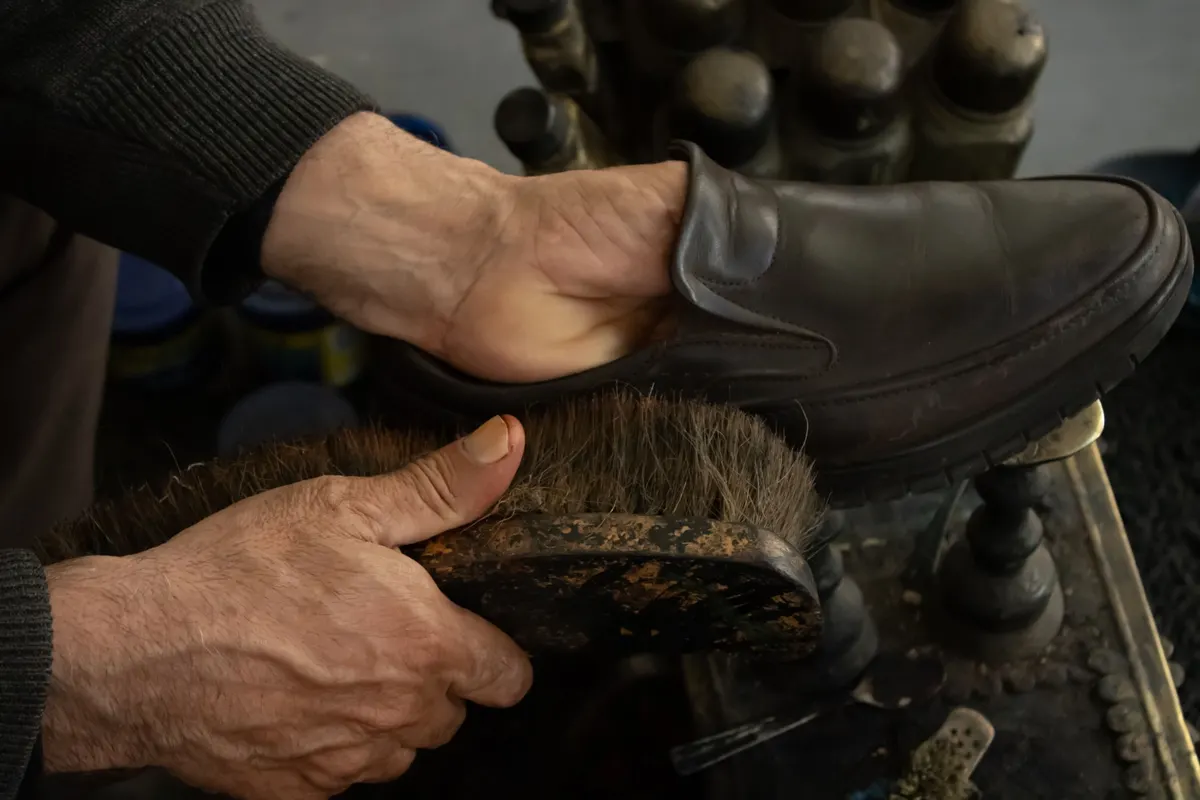
Well-made pieces can come out ahead on this measure, because they are often easier to repair and often resell better than very cheap ones. Brands that offer repairs help too. The Norwegian denim label Livid, for example, says it offers a free first repair. Looking after what you own, whether that’s brushing a leather shoe or mending a small tear early, keeps the wears coming.
When cost per wear misleads
It’s a helpful tool, not a rule. Be careful in these cases:
- Cheap and long-lasting. A $15 plain T-shirt you wear 150 times is an excellent deal. Expensive does not automatically mean better.
- Pieces you don’t love. A low number on something you never reach for is not value. You have to enjoy wearing it.
- Wrong size or fit. Clothes that don’t fit don’t get worn, whatever they cost.
- Trend pieces. If it only feels right for one season, expect a low wear count.
- Special occasions. A formal dress may only get a few wears. Renting or borrowing can beat buying.
- Price isn’t quality. A high price can pay for the label as much as for the making. Our quality checklist shows how to check the piece itself.
How to lower your cost per wear
- Buy what fits your real life, not an imaginary one. Think about where and how often you’d wear it.
- Choose a style you’ll still like in five years. Classic shapes and neutral colours usually get more wears.
- Check the construction before you buy, so it lasts. See the 10-point quality checklist.
- Care for it properly. Following the care label and storing it well makes pieces last longer.
- Repair instead of replacing. A small repair costs far less than a new piece.
- Resell or pass on what you no longer wear, so someone else keeps using it.
- Try it with what you already own. Your cheapest piece per wear is usually something you’ve had for years.
Examples from our directory
To see how this works with real prices, here are eleven pieces from brands in our directory, with the number of wears each would need to reach $3 a wear. The prices are the ones we recorded in our brand profiles in October and November 2026. They change, so check the brand’s own store.
| Piece | Brand | Example price | Wears to reach $3 per wear |
|---|---|---|---|
| Sweater (entry price) | Dale of Norway | from $240 | 80 wears |
| Cortina 1956 sweater | Dale of Norway | $370 | 124 wears |
| Bregancon Breton sweater | Saint James | $335 | 112 wears |
| Marcus jumper | John Smedley | $435 | 145 wears |
| Red cashmere crew neck jumper | Johnstons of Elgin | $495 | 165 wears |
| Steady Eddie II jeans | Nudie Jeans | $195 | 65 wears |
| Martin jeans | A.P.C. | $340 | 114 wears |
| Third Cut jeans | Our Legacy | $460 | 154 wears |
| Kabig coat | Saint James | $689 | 230 wears |
| Silo bag | Sézane | $240 | 80 wears |
| Handbag (entry price) | ATP Atelier | from $450 | 150 wears |
Put these next to your own habits from the table above. If you wear jeans about 120 times a year, a $340 pair of A.P.C. jeans reaches $3 a wear (114 wears) in about 11 months. A $689 coat worn 60 times a year gets there (230 wears) in under four years. Both are examples, not promises.
This isn’t a recommendation to buy these particular pieces, and we have no way of knowing how often you’d wear them. It’s just a way to see what the numbers look like. To see how we choose which brands to feature, read How We Choose the Brands We Feature, or browse every brand in our directory.
A final thought
Cost per wear doesn’t tell you what to buy. It tells you what question to ask: how often will I really wear this, and for how long? Once you ask it, a lot of choices get easier. Often you’ll find you want fewer things, and you want them to be good.
When you’re ready to look for well-made pieces, browse our European brand directory and see what each brand makes and stands for.
Sources and caveats
- Cost per wear is a simple calculation, not a standard. The wear counts in the examples are assumptions.
- The #30wears idea comes from Eco-Age, the sustainability consultancy co-founded by Livia Firth. Sources disagree on the exact year it began, so we don’t give one.
- The 36% fall in the average number of wears between 2000 and 2015 is from the Ellen MacArthur Foundation’s 2017 report A New Textiles Economy. Later Foundation material quotes a figure closer to 40%, so numbers vary by source.
- Prices come from our brand profiles and posts (October and November 2026) and may have changed. Always check the brand’s own store.