
TL;DR: In Europe, “organic” is a legally regulated term with enforceable standards, not a marketing claim any brand can make freely. European organic ingredients are more strictly defined, more traceable, and more consistently certified than in most other markets. But organic alone doesn’t guarantee a better product. Here’s what the term actually covers and what to look for beyond the label.
Walk into any pharmacy or beauty aisle, and you’ll see “organic,” “natural,” and “clean” used almost interchangeably. They’re not the same thing. In most markets, two of those three words mean almost nothing legally. In Europe, one of them carries real weight.
Understanding the difference and knowing what the European organic framework actually requires is what separates a useful purchasing decision from one driven purely by packaging.
What “Organic” Actually Means Under EU Law
In the European Union, “organic” is not a marketing term. It is a legally protected designation governed by EU Regulation 2018/848 — the EU’s comprehensive organic production framework, which replaced and strengthened earlier legislation.
To label an ingredient or product as organic in the EU, producers must demonstrate:
- No synthetic pesticides or herbicides: organic crops must be grown without the synthetic chemical inputs widely used in conventional agriculture
- No GMOs: genetically modified organisms are prohibited throughout the organic production chain
- No artificial fertilisers: soil fertility must be maintained through natural means: composting, crop rotation, and green manures
- Controlled processing: the list of additives and processing aids permitted in organic products is strictly limited; many substances allowed in conventional production are excluded
- Annual inspection and certification: producers must be certified by an approved control body and inspected at least once per year to maintain their organic status
This framework applies to EU agricultural production across food, feed, and increasingly, cosmetic ingredients. It is enforced, not self-declared.
By comparison, the US has the National Organic Program (NOP) administered by the USDA, which applies robust standards to food and agricultural products. However, NOP certification does not automatically apply to cosmetics, meaning a beauty product labeled “organic” in the US may contain a small percentage of certified organic ingredients while the rest of the formula is uncertified. The EU framework is more holistic in how it extends across product categories.
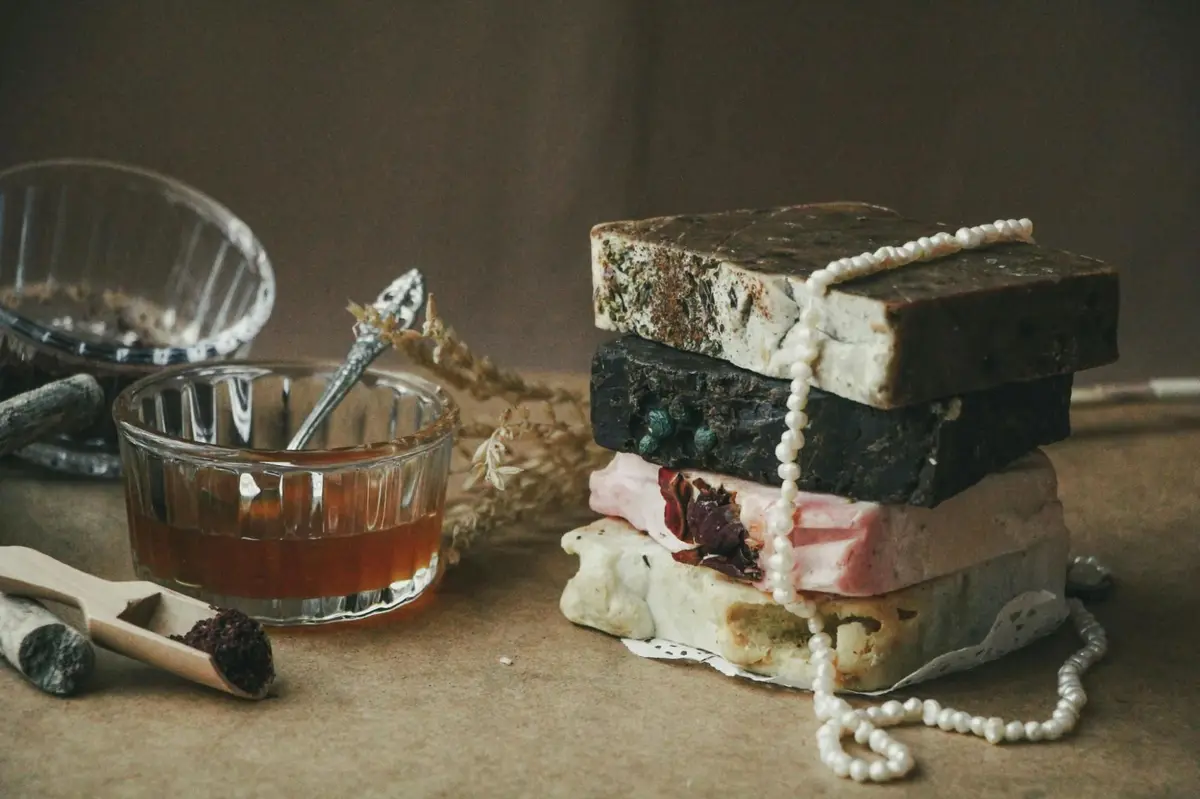
Artisan soaps made with botanical inclusions. This kind of minimal, ingredient-led formulation is made possible by European organic certification.
The Certifications That Go Beyond the Legal Minimum
EU organic regulation sets the legal baseline. Several independent certification bodies go significantly further, setting higher thresholds, stricter supply chain requirements, and more rigorous standards for what counts as organic in a finished cosmetic product.
COSMOS
The COSMOS standard (Cosmetic Organic and Natural Standard) is the most widely used organic and natural cosmetic certification in Europe, developed jointly by five of Europe’s leading organic certification bodies: Ecocert, BDIH, Cosmebio, ICEA, and Soil Association.
COSMOS defines two tiers:
- COSMOS Organic: a minimum percentage of the total product must be certified organic, and a minimum percentage of the agro-ingredients (plant-based ingredients) must be certified organic. Exact thresholds vary by product type.
- COSMOS Natural: requires natural or naturally derived ingredients, but a lower organic threshold than COSMOS Organic.
COSMOS also prohibits ingredients of petrochemical origin, GMOs, synthetic colorants, and animal testing, which goes well beyond baseline EU cosmetic regulation.
Ecocert
Ecocert is one of the world’s oldest and most established organic certification bodies, founded in France in 1991. It certifies both agricultural products and cosmetics, and its standards form part of the COSMOS framework. Ecocert certification requires a minimum of 95% naturally derived ingredients and a minimum of 10% of the total formula from certified organic farming.
BDIH
The BDIH standard (Bundesverband Deutscher Industrie- und Handelsunternehmen) is Germany’s controlled natural cosmetics standard, being one of the strictest in Europe. BDIH prohibits synthetic fragrances and colorants, silicones, paraffins, and ingredients derived from dead vertebrates, while requiring that plant-based raw materials be organically or wild-crafted wherever possible.
EU Organic Logo
The EU Organic logo (the green leaf made of white stars) is the official EU certification mark for food and agricultural products. When you see it on a skincare ingredient or a food product, it means the ingredient meets EU Regulation 2018/848 requirements and has been certified by an approved control body. It is the most recognizable legally enforceable mark in European organic production.
Soil Association (UK)
Since Brexit, the Soil Association Organic standard operates independently of EU certification but maintains equivalent rigor. UK-certified organic products are still widely sold and trusted across European markets, and Soil Association certification is a reliable signal of high organic standards for British brands.
Origin and Traceability: Why They Matter
One of the most distinctive features of European organic production is the emphasis on where ingredients come from and how they travel from field to formula.
This isn’t just philosophical. European organic certification requires documented traceability at every stage of the supply chain, from the farm where an ingredient is grown, through extraction and processing, to the finished product. This creates an audit trail that most conventional supply chains don’t have.
In practice, this connection to origin produces some of the most distinctive ingredients in European skincare and food:
France has some of the most developed regional ingredient traditions in the world. Provence lavender oil, grown and distilled under the Lavande de Haute Provence Label Rouge, is arguably the world standard for lavender quality. Grape-derived antioxidants from Bordeaux vineyards, thermal water from specific geological sources in the Auvergne, and rose extract from Grasse, these are ingredients tied to place in ways that affect both quality and traceability.
Italy produces some of Europe’s most rigorously certified olive oil, citrus extracts, and botanical oils. Italian organic certification requirements are among the most consistently enforced in the EU, and brands like Borghese and smaller artisan producers draw on ingredients with documented regional origins.
Germany and Switzerland have longstanding traditions of biodynamic farming that treat the farm as a self-sustaining ecosystem. Weleda, founded in 1921, sources many of its ingredients from biodynamic farms it operates directly or works with long-term. Dr. Hauschka follows a similar model. These brands don’t just source organic ingredients; they cultivate relationships with the farms that produce them over decades.
Bulgaria supplies the majority of the world’s Rosa Damascena rose oil, still distilled using traditional steam methods in the Rose Valley. Bulgarian rose oil appears in luxury fragrances and high-end skincare worldwide, and the best of it carries traceable origin documentation.
Scandinavia has a strong tradition of wild-crafted ingredients such as cloudberry, sea buckthorn, birch sap, and Arctic botanicals. They are harvested from unpolluted environments rather than farmed conventionally. While not all wild-crafted ingredients are certified organic, the combination of remote sourcing environments and strict Nordic environmental standards produces ingredients with strong natural purity profiles.
Organic vs Natural vs Clean: What Each Term Actually Means
These three terms are used interchangeably in marketing, but they mean very different things in practice.
Organic is the most regulated. In Europe, it requires certification to legally defined standards, including production methods, permitted inputs, annual inspections, and documented traceability. A product or ingredient genuinely is or isn’t organic under EU law. The term has teeth.
Natural means ingredients derived from natural sources rather than synthetic ones. In Europe, there is no single legal definition of “natural” for cosmetics. Any brand can use this term without independent verification. COSMOS Natural and BDIH provide frameworks for natural cosmetics, but brands that use “natural” without these certifications are self-declaring. Natural does not mean organic, does not mean free from pesticides, and does not mean free from processing.
Clean has no legal definition anywhere in the EU or the US. It is a marketing category invented by the beauty industry, defined differently by every brand that uses it. One brand’s “clean” excludes parabens; another’s excludes silicones; another’s excludes anything with a long chemical name. The EU’s Empowering Consumers Directive (enforced from September 2026) will require brands to substantiate general environmental claims, but “clean beauty” as a category-specific term is still undefined and unregulated.
When you see all three terms on a product, organic is the only one you can verify independently. The others require further investigation.
What Organic Doesn’t Guarantee
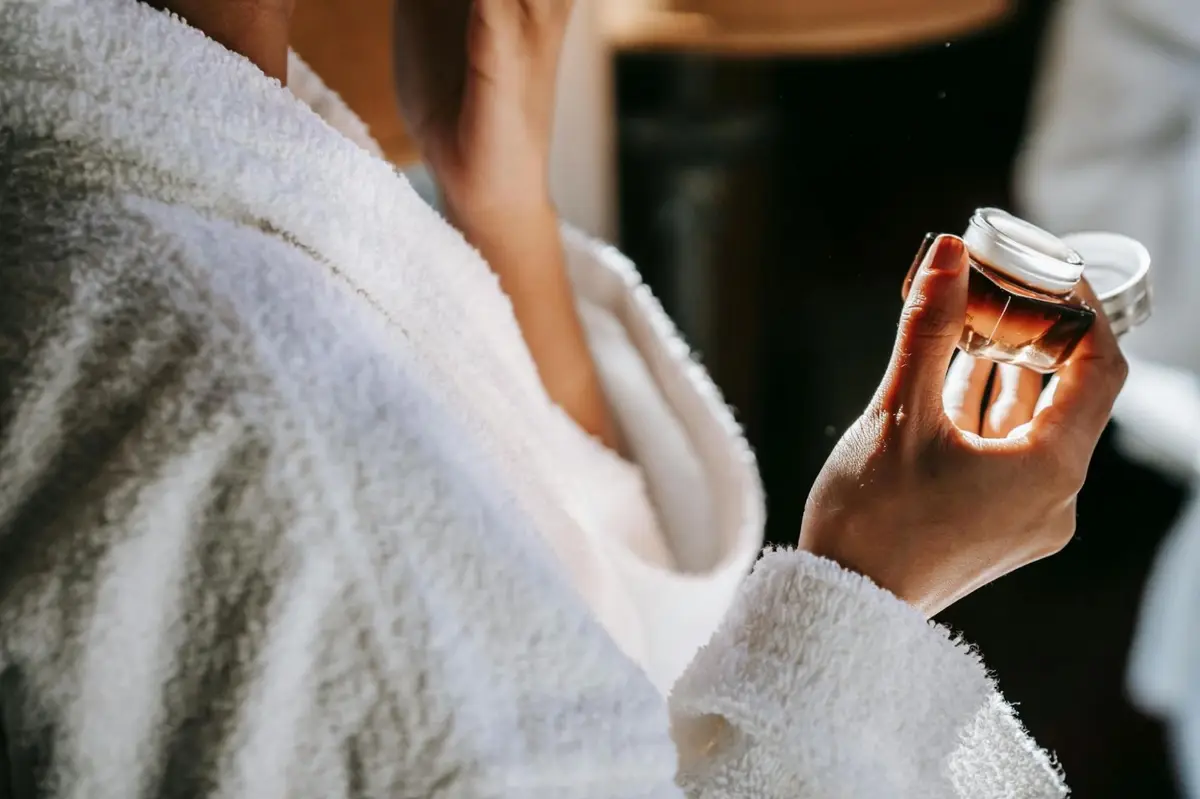
Organic certification covers how an ingredient is grown. It’s not always about what percentage of the formula is certified or how the rest of the product is made.
Being clear about the limits of organic certification is just as important as understanding its value.
Organic doesn’t mean more effective. The concentration of an active ingredient, how it’s formulated with other components, and how a product is used all affect whether it works. Some organic botanical extracts are highly potent; others are present in such small quantities that their organic status has no meaningful impact on the product’s performance.
Organic doesn’t mean non-irritating. Some of the most common skin irritants are natural and organic, for example, essential oils, certain plant acids, and fragrance compounds from botanical sources. If anything, the fragrance allergen disclosure requirements under EU cosmetic regulation exist precisely because natural fragrances are a significant irritant source.
Organic doesn’t mean sustainable. An ingredient can be certified organic while still requiring long-distance shipping, energy-intensive extraction, or packaging that produces significant waste. Sustainability is a system question involving the entire production and distribution chain, not just how a crop was grown. For a broader look at how European brands approach sustainability beyond ingredient sourcing, the sustainability post covers the full regulatory picture.
Organic percentage matters. A product labelled “with organic ingredients” may contain a very small percentage of certified organic content alongside a largely conventional formula. Under COSMOS Organic, the minimum organic threshold must be met and disclosed. Without a recognized certification, there is no independent check on how much organic content a product actually contains.
How to Actually Read an Organic Product Label
When you’re evaluating a product that claims to use organic ingredients, here’s what to look for:
- 1Find the certification mark, not just a claim. The EU Organic logo, COSMOS, Ecocert, BDIH, or Soil Association mark should be visibly displayed. If a product says "organic" with no certification body named, it's self-declared.
- 2Check the percentage disclosed. COSMOS-certified products disclose the percentage of organic content. If no percentage is given, ask why.
- 3Look at where the organic claim applies. Does it apply to the whole product, or just one ingredient? A moisturizer with "organic aloe vera" in position 15 on the ingredient list is not an organic product.
- 4Read the full ingredient list. A certified organic product still has other ingredients. Check those too, particularly if you're avoiding specific substances.
- 5Research the certification body. The five major European bodies (Ecocert, BDIH, Cosmebio, ICEA, Soil Association) are well-established and independently audited. Lesser-known certification marks deserve scrutiny.
Final Verdict
European organic ingredients stand out because the framework behind them is legally defined, independently verified, and actively enforced, not self-declared. The EU’s organic regulation, combined with certification bodies like COSMOS, Ecocert, and BDIH, creates a system where “organic” carries real meaning rather than just marketing intent.
That said, organic certification is a starting point, not a guarantee of quality, efficacy, or sustainability. The brands worth finding are those that combine certified ingredients with thoughtful formulation, honest labeling, and a production philosophy built around longevity rather than trend cycles.
Here’s how we evaluate the brands we feature, and if you’re ready to explore, browse the directory filtered for quality, transparency, and honest production.
Browse European skincare and beauty brands Every brand in our directory has been evaluated for ingredient transparency, certification standards, and production honesty. Here’s how we decide which ones make the cut. Explore the directory ↗